
Campervan Packing List: 12 Smart Things to Bring (and 6 to Leave Home)
Most people overpack for a van trip. They show up at pickup with two hard-shell suitcases, a bag of pots and pans, and a camping lantern they bought the night before, then discover the van already has all of it. A good campervan packing list is mostly about knowing what you don’t need to bring.
The other half is packing for where you’re actually going. In October and November, a trip from Las Vegas to Zion or Bryce Canyon can start at 80 degrees and end below freezing on the same day. The things people forget are almost always the things that keep them warm, hydrated, or organized.
This post covers what already comes in a Vegas Campers van, the 12 things you still need to pack, what to pick up in Las Vegas after pickup, and six things that are better left at home.
What’s Already in the Van (Don’t Pack These)
Every Vegas Campers van is built the same way and stocked for two people. Before you start a list, cross these off:
- Bedding: sheets, two pillows, a blanket, and a sleeping bag that unzips into a double
- Towels: two bath towels and two hand towels
- Kitchen: stove, pot, pan, plates, bowls, cups, mugs, cutlery, cooking utensils, a kettle, an AeroPress, a bottle opener, and a can opener
- Pantry basics: salt, pepper, olive oil, instant coffee, and tea
- Stove fuel: two new butane canisters plus whatever is left in the stove
- Water: a 5-gallon jug of purified drinking water and a small sink
- Power and light: 8–10 USB ports, two standard outlets, solar charging, flashlights, a lantern, and string lights
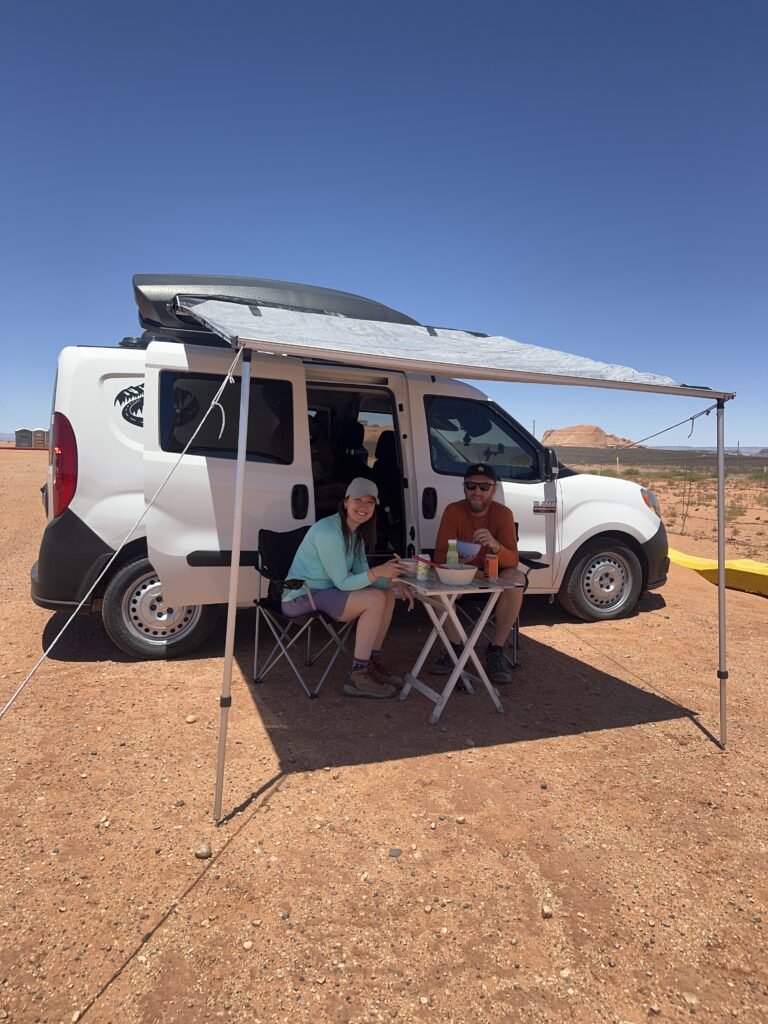
- Camp setup: two chairs, a small folding table, an awning, and a USB-powered outdoor shower
- Cleaning: dish soap, sponges, paper towels, toilet paper, and a first aid kit
That is the bulk of what a camping list usually covers. What’s left is personal: clothes, shoes, toiletries, and a few items that make a real difference on cold nights.
The Campervan Packing List: 12 Things You Actually Need
1. Layers, not a big coat
Fall in the desert swings 35 to 40 degrees between afternoon and dawn. A base layer, a fleece, and a packable puffy handle that better than one heavy jacket, and they fit in a duffel. Add a light rain shell if your trip runs into November.
2. Warm sleep clothes and a beanie
This is the item people regret skipping. Bryce Canyon averages lows around 34°F in October and 24°F in November, according to the National Park Service. Wool socks, thermal pants, and a hat you can sleep in do more than an extra blanket.
3. A 12-volt electric blanket (optional, but worth it)
If you run cold, a 12V heated blanket with a cigarette-lighter plug is the single best upgrade for a late-fall trip. It runs off the van’s electrical system. You can also start the engine and run the heater for a few minutes before bed.
4. Two reusable water bottles per person
Zion does not sell bottled water, but there are free refill stations at the visitor center, Zion Lodge, the Grotto, and Temple of Sinawava, per the NPS goods and services page. Bring bottles you’ll actually carry on a trail, ideally a liter each.
5. Broken-in hiking shoes
Not new ones. Blisters on day two will reshape your whole trip. If you plan to hike the Narrows, you can rent canyoneering shoes in Springdale rather than packing water shoes.
6. A small daypack
Big enough for water, layers, snacks, and sunscreen. Your main bag stays in the van.
7. Sun protection
Sunscreen, sunglasses, lip balm with SPF, and a brimmed hat. The sun at 8,000 feet in October is stronger than it feels, and the air is dry enough to crack lips in a day.
8. Toiletries and flip-flops
Bring your own toothbrush, toothpaste, shampoo, and any medications. Shower shoes help at campground bathhouses and with the outdoor shower.
9. A swimsuit
Not for swimming. The outdoor shower is outdoors, and a swimsuit is the easiest way to use it at a campground without an audience.
10. A phone mount and charging cables
The vans don’t have built-in GPS. Bring the right cables for your devices. We supply some, but its better to be sure! The USB ports handle the charging.
11. Offline maps, downloaded before you leave
Cell service drops out on long stretches between Las Vegas and southern Utah. Download offline areas in Google Maps for every region you’ll drive through, and save your campground confirmations as screenshots.
12. A national park pass
If you’re visiting more than one park, an annual pass usually pays for itself. As of 2026, the standard America the Beautiful pass is $80 for U.S. residents. Non-residents pay a $100 per-person surcharge at Zion, Bryce Canyon, and Grand Canyon unless they carry the new $250 non-resident annual pass. Check current pricing on the NPS passes page before you buy.
What to Pick Up in Las Vegas After Pickup
Some things are easier to buy than pack. Plan a single stop on your way out of town.
Groceries. Las Vegas has more choice and lower prices than the small towns near the parks. Shop for two or three days at a time; the fridge is compact and runs on the van’s battery.
Extra stove fuel. If you plan to cook two or three meals a day, a canister may only last a day or two. Butane canisters are sold at most Walmarts and camping stores.
Water refills. You start with 5 gallons. When you need more, search “water” in Google Maps for a Watermill Express or Glacier Water machine, or check the back of a Walmart. It’s usually a dollar or two to refill the jug.
Firewood, if you need it. Buy it near your campground, not in Las Vegas. Many parks restrict out-of-area firewood, and seasonal fire restrictions change often, so check the campground’s rules first.
What Not to Bring: 6 Things to Leave Home
- Hard-shell suitcases. They’re awkward in a small van. Soft duffels pack into corners, and the rooftop box handles anything bulky.
- Your own cookware or bedding. It’s already there, and doubling it just eats storage space.
- Hair dryers or other high-wattage appliances. The inverter charges laptops and cameras but can’t run a hair dryer.
- A portable gas heater. Not allowed. Carbon monoxide in a small enclosed space is a real risk. Use layers, the sleeping bag, a 12V blanket, or the vehicle’s heater. We supply a Buddy Heater for you starting in November.
- Skis or ski boots inside the van. They scratch the floor. Gear like this goes in the roof box.
- Pets. Some Vegas Campers vans are pet-free- double check that you booked a van thats pet friendly if your bringing your furry friend!
A Few Honest Notes Before You Pack
Vegas Campers vans sleep two people maximum. They’re built for solo travelers and couples. If you’re traveling as a family of four, you’ll want a larger RV or rent two vans!
The vans also stay on paved roads. You can drive a very short stretch at low speed into an established campground, but trailheads and campsites that require dirt-road access are off the list. Check your route before you commit to a campground.
If your trip is in November or later, read How to Stay Warm in a Campervan before you finalize this list. Cold is the one thing people consistently underestimate.
Pack Light, Pack Warm, and Go
The short version of any good campervan packing list: bring clothes for a wider temperature range than you think, refillable water bottles, and the things that are personal to you. Leave the kitchen, the bedding, and the camping gear to the van.
Vegas Campers vans are stocked so you can land in Las Vegas or St. George, grab the keys, and head out. Book direct at vegascampers.com.