
Camping in Death Valley: 5 Best Campgrounds + Essential Tips
Camping in Death Valley is easier than most people expect and harder than most people prepare for. Easier, because the park is two hours from Las Vegas and the classic sights are all on pavement. Harder, because there is no grocery store, almost no cell service, and gas costs roughly double what it does in town.
The season also runs backwards from what you’d assume. Summer is the off-season here — several campgrounds close entirely — and the good stretch is mid-October through mid-April, when Furnace Creek sits in the 70s during the day.
That season starts in about six weeks. Below: the five campgrounds you can reach without leaving pavement, the road closures currently in effect, the logistics that catch first-timers out, and a practical packing list.
When to Go: The Season Runs Backwards
Death Valley is on an inverted calendar compared to Zion and the Utah parks. Peak camping runs mid-October through mid-April.
November typically brings daytime highs in the 70s at Furnace Creek with nights in the 40s and 50s. December and January cool into the 60s during the day and can drop near freezing overnight. February and March bring the best odds of wildflowers.
Elevation changes everything here. Furnace Creek sits 196 feet below sea level. Drive an hour and you can be at 5,000 feet, where it’s 20 degrees colder and windy. A forecast for “Death Valley” is really a forecast for one specific spot in it — check the elevation of where you’re actually sleeping.
Three campgrounds — Sunset, Texas Springs, and Stovepipe Wells — are closed for the summer as of this writing and typically reopen around October 15.
5 Paved-Access Campgrounds in Death Valley
1. Furnace Creek Campground. The park’s hub, next to the visitor center. 136 sites, 18 with electric hookups, flush toilets, water, and a dump station. Reservation-required October 15 through April 15, bookable six months ahead. Book on Recreation.gov.
2. Sunset Campground. Across the road from Furnace Creek — a large gravel lot with 270 sites in rows. No shade, no charm, no hookups. But it’s first-come, first-served and rarely full, which makes it the fallback that saves your trip when Furnace Creek is booked. Typically opens mid-October.
3. Texas Springs Campground. Just above Sunset and considerably more pleasant, with some shade and real sites. First-come, first-served, generally reopening around October 15. NPS Texas Springs page.
4. Stovepipe Wells Campground. At sea level, 190 first-come, first-served sites, directly across CA-190 from the Mesquite Flat Sand Dunes. Walking distance to a general store, gas, and paid showers. Reopens mid-October. NPS Stovepipe Wells page.
5. Panamint Springs Resort. Private, on CA-190 at the park’s western edge. Full-hookup and dry sites, showers included with your site, a restaurant, and a gas station. Only some sites are reservable. Reserve at panamintsprings.com.
One booking note worth acting on
Furnace Creek’s reservation window opens six months out. If you want an electric site over Thanksgiving or the winter holidays, that release date has already passed — but cancellations turn over constantly, so check back rather than giving up.
Logistics That Catch First-Timers Out
Roads change, so check the day before you leave
The biggest planning risk with camping in Death Valley is a road you assumed was open. The park has taken serious flood damage over recent seasons and the situation genuinely shifts. Check the official NPS Alerts & Conditions page within a day or two of departure.
As of the park’s August 2026 update: Scotty’s Castle and Bonnie Clare Road remain closed with no reopening date. Southern Badwater Road has loose gravel, soft shoulders, and unpaved sections — passable, but slow down. Darwin Falls Road is closed into summer 2027, though you can still hike in from CA-190. Titus Canyon Road closes October 1, 2026 through September 2027 for repairs, and it’s rough one-way dirt regardless.
The good news: Badwater Basin, Artists Drive, Zabriskie Point, Dante’s View, Mesquite Flat Sand Dunes, Golden Canyon, and Ubehebe Crater are all reachable on pavement. You are not missing the park by staying on asphalt.
There are exactly three gas stations, and they’re expensive
Fuel is available at Furnace Creek (24 hours, the only one with diesel), Stovepipe Wells (roughly 7 a.m. to 8 p.m., no diesel), and Panamint Springs (roughly 8 a.m. to 8 p.m.). Prices inside the park are among the highest in the country.
Fill up in Pahrump or Beatty on the way in. Treat in-park fuel as an emergency option, not a plan.
Cell service is close to nonexistent
You may get a signal around Furnace Creek. You will not get one at Stovepipe Wells, the dunes, or most of the park. Download offline maps before you reach the park boundary and tell someone your rough plan. This is the single most common preventable mistake.
The entrance fee is card-only
Death Valley is a cashless park — the vehicle pass is paid by card at kiosks and visitor centers, and it’s good for seven days. Current rates are on the NPS fees page.
What to Pack for Camping in Death Valley
Most of what makes camping in Death Valley comfortable is stuff you’d forget on a Zion trip.
Water, and then more water. Beyond what’s in the van’s tank, carry drinking water separately — a gallon per person per day is the floor, not the target. Refill at Furnace Creek and Stovepipe Wells.
Real layers. A 45-degree temperature swing between afternoon and dawn is normal. Fleece, a warm hat, and a wind layer earn their space even in October.
Sun protection past what feels reasonable. Wide brim, sunglasses, and lip balm with SPF. Shade is genuinely scarce at most campgrounds.
Groceries bought before you arrive. There is no real grocery store inside the park. Stock up in Las Vegas or Pahrump — the in-park stores are for snacks and forgotten items at resort prices.
A paper map. When your phone has no signal and no data, a folded park map is not a nostalgia item.
Something to block light and heat. Window covers make a parked van dramatically more comfortable in the afternoon and darker in the morning.
Here’s what we recommend you bring!
Why a Campervan Suits This Park
Death Valley rewards being self-contained more than almost anywhere. Lodging inside the boundary is limited and expensive, the nearest towns are 45 to 90 minutes out, and the best light lands at hours you don’t want to be driving in from Beatty.
There’s also the sky. Death Valley is a certified Gold Tier International Dark Sky Park, one of the darkest accessible places in the country — which is the whole argument for sleeping here rather than day-tripping.
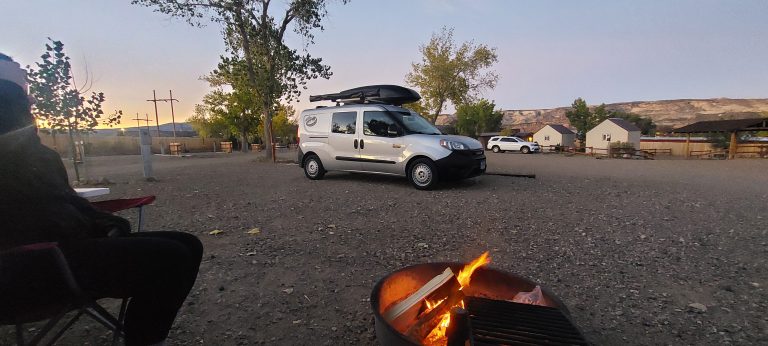
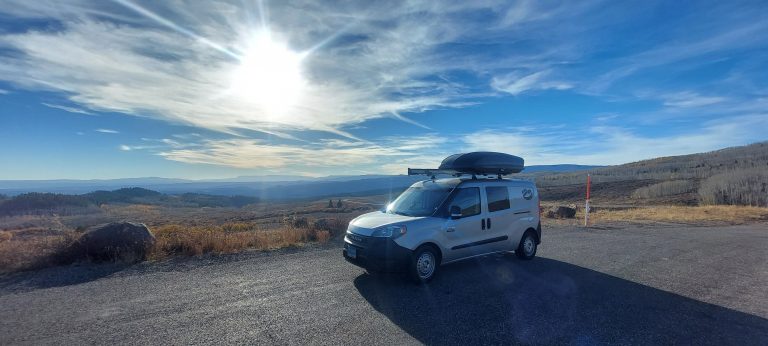
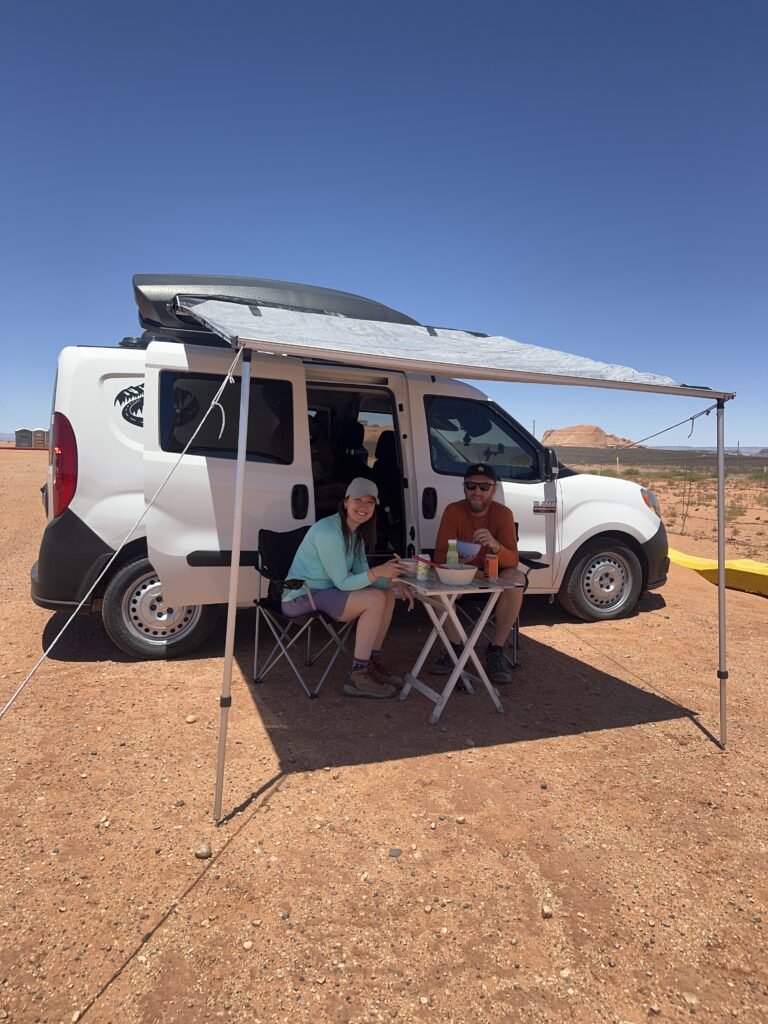
At Vegas Campers, your van gets you a vehicle, bed, and kitchen in one line. Our vans are custom-built Dodge Promaster campervans that sleep two, which makes them right for solo travelers and couples. Traveling as a family of four? A Class C rental is the honest answer.
Ready to Go?
Camping in Death Valley is one of the best cold-weather trips you can take out of Las Vegas — two hours of driving, thin crowds, and a night sky most people never get to see. Two days covers the highlights. Four is comfortable.
The season opens in mid-October and Furnace Creek’s reservation window is already six months deep. Lock the van first, then build the campground plan around it.
Check availability and book direct at vegascampers.com.